
Poor Assignment Help? A Practical Recovery Plan
A practical, institution-first recovery plan for missed briefs, weak citations, authorship concerns, disputes, and looming deadlines.
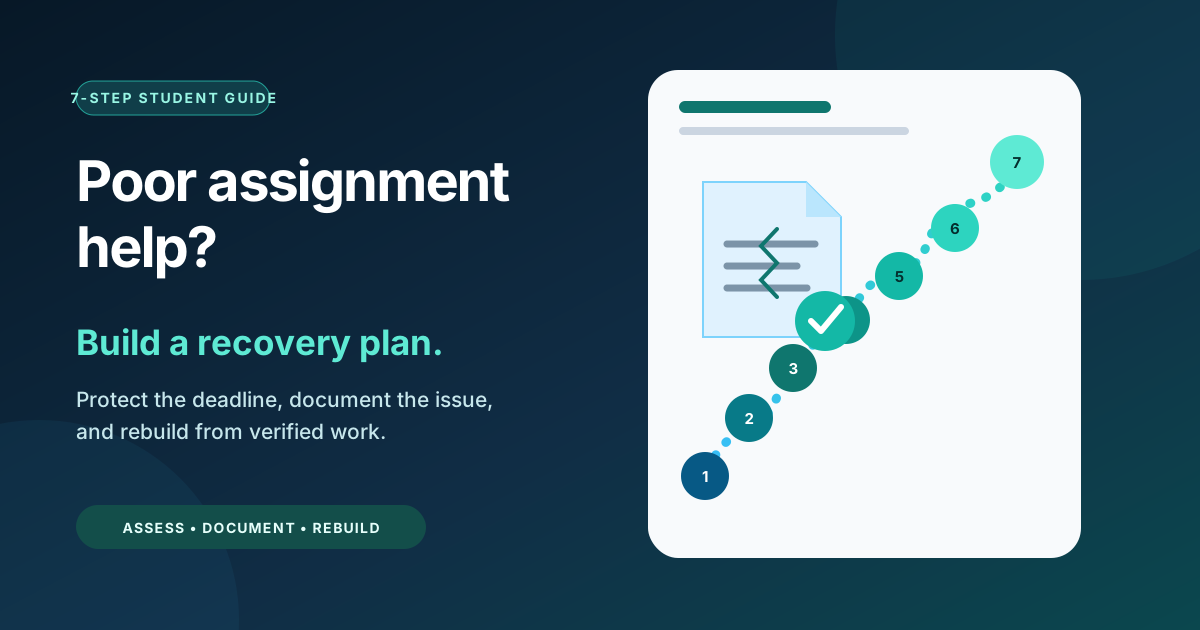
Receiving weak assignment help can feel like losing both money and time. The useful response is not panic, a revenge post or another rushed purchase. It is a controlled recovery: preserve the evidence, protect your authorship, rebuild against the rubric, and use the right dispute route if the agreed service was not delivered.
Editorial and evidence note — 14 July 2026: This guide was checked against the university and marketplace sources linked below. It does not determine whether any named provider breached a contract and does not promise that a refund, extension or grade change will be granted. Preserve your own records and follow the current terms that apply to you.
First, define the problem without guessing at motive
“Poor assignment help” may misunderstand the question, use unsupported sources, omit required sections, contain code that does not run, arrive too late to help, or cross an authorship boundary.
Describe observable defects: “Three citations do not resolve”, “the analysis uses 2022 data although the brief requires 2025”, or “the notebook fails at cell 14”. Avoid guessing why. A precise defect list supports repair and any remedy request.
The first 15 minutes: freeze the evidence
Before making edits, save a read-only copy of:
- the original assignment brief and marking rubric;
- the quote, invoice, scope and revision or refund terms;
- dated messages and agreed milestones;
- every file and version received;
- your own notes, outline and earlier drafts;
- source links, test logs and similarity feedback available to you.
Do not manufacture timestamps, reconstruct a false drafting history or ask anyone to do so. Keep necessary personal data private. This evidence pack has two purposes: it shows what you genuinely created, and it lets you compare the delivered support with the written agreement.
Minutes 15–45: run a five-layer triage
1. Relevance
Turn each rubric criterion into a question. Does the draft answer the task verb and use the required case, framework and dataset? Remove material that does not serve the rubric.
2. Evidence
Open every cited source. Confirm the author, title, date, page and claim. Remove invented or irrelevant citations. A reference list that looks polished is not evidence unless the body accurately uses those sources.
3. Reasoning
For each paragraph, write the claim in one sentence and the reason it supports the main answer in another. If you cannot do that, rebuild the paragraph from sources and module concepts you understand.
4. Authorship and permission
Mark which material is yours, which is quoted, which arose from allowed feedback, and which you cannot explain. The central NUS Code of Student Conduct sets expectations for academic, professional and personal integrity. NTU describes having someone complete work for submission as contract cheating. If the received document would be misrepresented as your own, do not simply polish and submit it.
5. Technical function
For code, rerun the project in a clean environment and record the first failure. Reproduce quantitative calculations and inspect units. For essays, match quotations to page references. Fix function before presentation.
Choose the recovery path by time remaining
More than 48 hours: rebuild from your own outline
Return to the brief. Create a fresh outline in your own words, reuse only sources you have checked, and draft the highest-weight sections first. Ask a tutor or editor for explanation and feedback on your attempt, not an opaque replacement. Keep version history.
For programming, reduce the project to the smallest working case, restore dependencies, add tests one requirement at a time, then document what you changed. A smaller solution you understand is usually safer than a sophisticated repository you cannot explain.
12–48 hours: salvage only verified components
Prioritise the thesis or problem definition, required analysis, evidence and conclusion. Remove unsupported claims rather than spending hours disguising them. If citations are unreliable, replace them with a smaller set of primary or scholarly sources you have actually read. If code has multiple failures, focus on required functionality and disclose known limitations where the assignment format allows.
Write to the provider at the same time. List each mismatch against the quoted scope, attach the relevant evidence, specify the remedy you seek and give a practical response time. Keep the tone factual. A strong request is easier to assess than “everything is bad”.
Under 12 hours: protect integrity before polish
Do not submit work you cannot explain merely because the deadline is close. Check the institution's official channel for clarification, late-submission rules or extension requests. If genuine circumstances justify an extension, provide truthful information. Do not invent an emergency.
Prepare the best authentic submission you can: answer the core question, use sources you verified, label limitations and meet required formatting. Late penalties and extension decisions vary, so consult the course guidance rather than assuming the outcome.
Already submitted: preserve, seek advice, do not rewrite history
Save the exact submitted version and submission receipt. If you discover a citation error or authorship concern, consult the lecturer, academic-integrity office, student-support service or an adviser through the institution's official process. Explain truthfully what happened and provide records if asked. Do not create a false process trail after the event.
Requesting a revision or refund
Base your request on the agreed service, not the grade alone. Quote the clause, identify the missed requirement and state a proportionate remedy: correction of specified sections, completion of a missing milestone, cancellation under the written terms, or a refund request where the terms allow.
Check the live Buyer Protection coverage before choosing a dispute route. The coverage page, checked 14 July 2026, expressly excludes Services, including customisable products described as services with tangible outcomes. It also excludes partial or full payments made outside the platform, such as direct bank transfer, cash or PayNow outside the app. An assignment-support order should therefore not be presented as Buyer Protection-eligible unless Carousell confirms otherwise for that exact transaction. For a different, eligible item transaction, the return/refund process explains the Order Details route, evidence requirements and possible outcomes.
Keep the academic issue separate from the consumer issue. A contractual remedy cannot convert prohibited assistance into permitted assistance, and a university decision does not automatically decide a payment dispute.
How to ask Codingo about a recovery scope
If Codingo is one option, ask it to describe the proposed recovery scope in writing against your defect list and institution's rules. Codingo's published Refund Policy says grades are not guaranteed, describes supplied materials as draft samples or reference points, and says customers should review, adapt and use them responsibly. Those are the published limits this guide can verify; the exact service action must be confirmed for the individual order.
Before engaging anyone again, use the five-minute service verification checklist. For careful treatment of online claims, read ACE Essay Service Reddit: what the evidence can show. For outcome-based advertising, see our pass-guarantee analysis. University-first guidance is collected in the Academic Integrity Resource Hub.
Frequently asked questions
Should I submit poor third-party work and fix it later?
Do not submit work you cannot explain or are not permitted to use. “Fixing it later” may not undo an authorship or citation problem. Rebuild from your own understanding and consult the instructor when the boundary is unclear.
What if the provider's citations do not exist?
Do not cite them. Preserve examples, notify the provider precisely, and replace them only with sources you personally verify and understand.
Can I raise a Carousell refund request after paying directly by bank transfer?
No. Carousell's current policy excludes Services and partial or full payment outside the platform. A direct bank transfer does not gain Buyer Protection merely because the parties first communicated on Carousell. Use the seller's written dispute route and seek transaction-specific advice where necessary.
A restrained next step
If you have time to recover and want to ask Codingo about a scope, send a redacted brief, your own draft and the defect list through the contact page. Request the proposed action, deadline, revision boundary and price in writing, then compare that proposal with the module rules and Codingo's published terms before proceeding.
Direct sources
Useful next steps

About Codingo Editorial Team
Trust & Academic Integrity Research at Codingo, focused on practical academic support, coding explainers, and Singapore university assignment guidance.
View all articlesRelated Articles
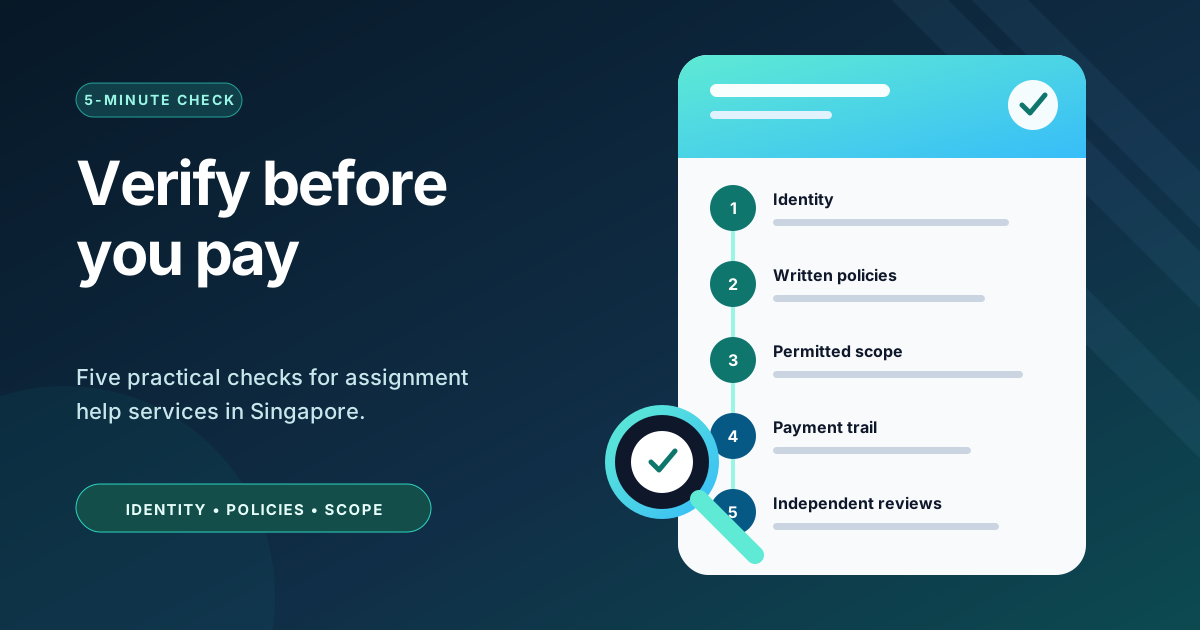
Is Assignment Help Legit? A 5-Minute Check
Verify any Singapore assignment-help provider in five minutes using identity, policy, payment, scope, privacy, review, and integrity checks.
11 min read
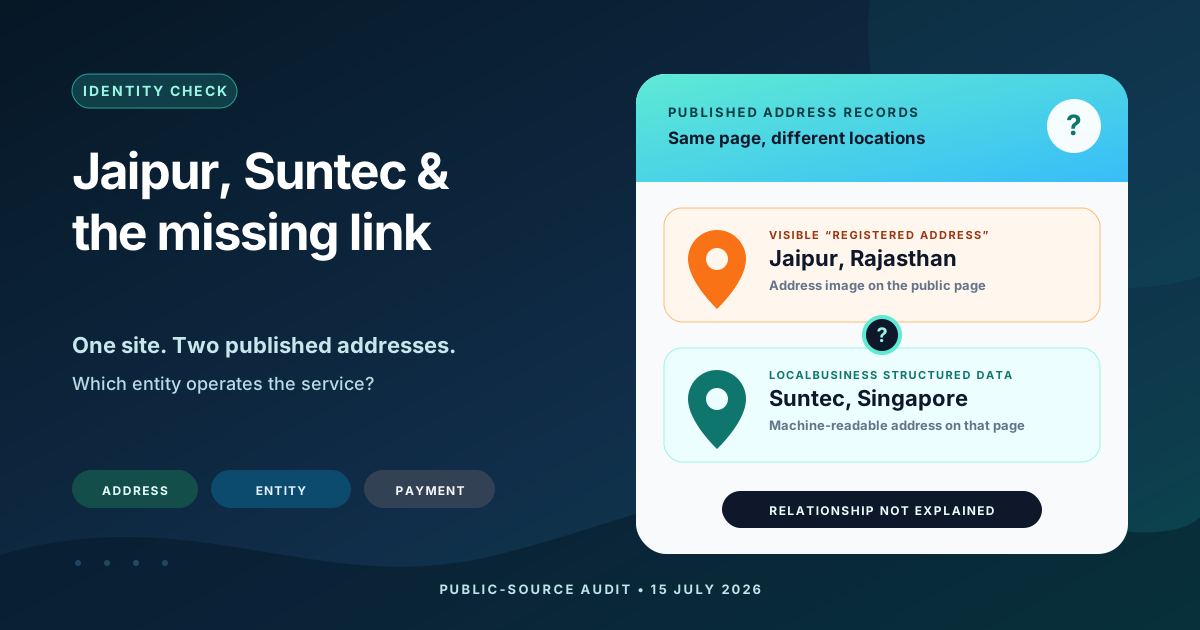
SingaporeAssignmentHelp Address: Jaipur vs Suntec
Why does SingaporeAssignmentHelp.com publish a Jaipur registered address but Suntec business markup? We trace its public company, payment, domain and identity signals.
12 min read
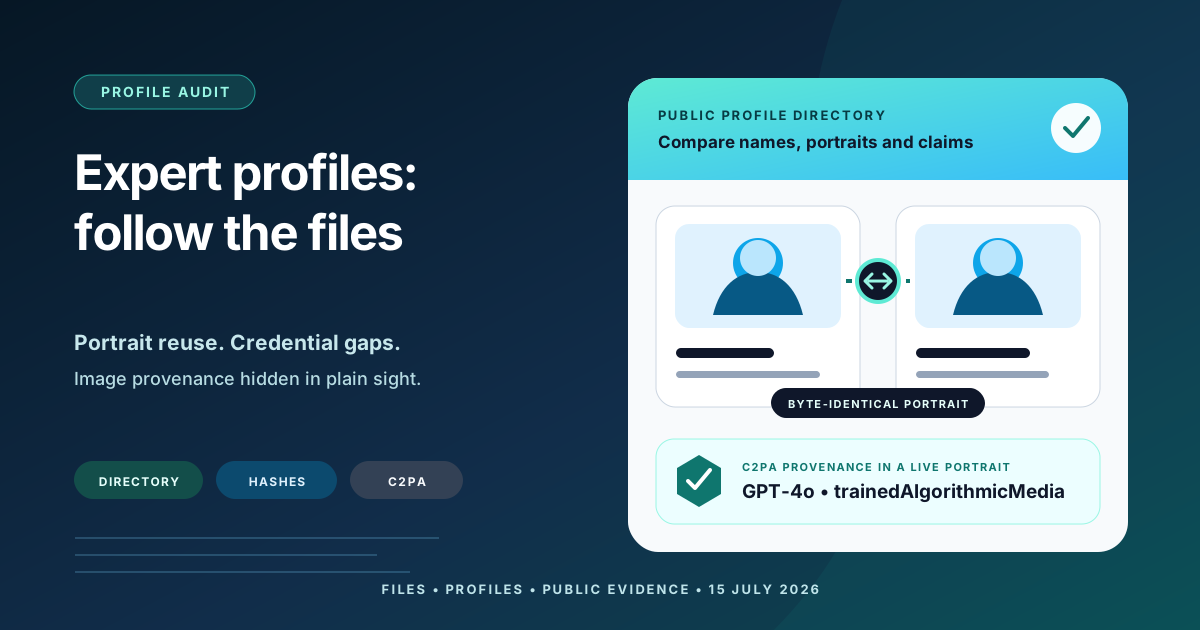
SingaporeAssignmentHelp Expert Profiles: AI Audit
A reproducible audit of 77 public expert profiles, reused portraits, GPT-4o Content Credentials, repeated testimonials and credential-verification gaps.
14 min read
Need support you can understand and defend?
Start with the assessment rules. We can scope tutoring, feedback, debugging, editing, source review, or guided drafting while keeping you in control of the final work.