
CM2005 Assignment Help Risks: SIM-UOL OOP Case Study
A clearly labelled composite shows how last-minute CM2005 C++ outsourcing can miss object-oriented outcomes—and why safer tutoring and recovery matter.
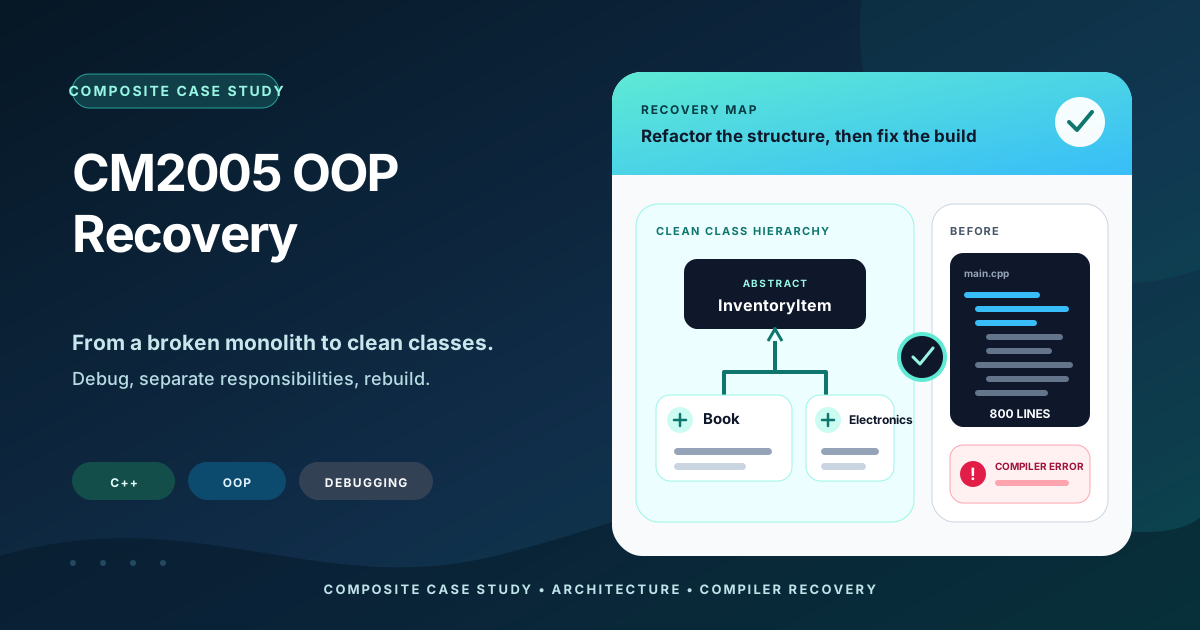
Short answer: A last-minute file that does not compile and replaces object-oriented design with one procedural main function does not demonstrate CM2005's published learning outcomes. A grade promise cannot repair that mismatch. The safest response is to stop, preserve evidence, tell the module team the truth, and rebuild a small solution you can explain—rather than submit third-party code as your own.
Scenario disclosure: Marcus, Adeline, the messages, files, timeline and outcome below are a fictional composite created to illustrate technical and academic-integrity risks. They are not presented as a verified transaction, complaint or finding about any named seller. The scenario supplied to Codingo named a Carousell provider, but no listing, chat export, source files or marking record was available for independent verification, so the provider has been anonymised.
Course-source note — 15 July 2026: Public CM2005 material confirms C++, objects and classes, interfaces, inheritance, coding style and documentation. It does not confirm a current inventory-management brief or the exact rubric in this composite. Assessment instructions can change; follow the brief in your current VLE.
The Composite Scenario
“Marcus”, a Year 2 SIM–University of London Computer Science student, is stuck on a hypothetical CM2005 inventory-system assignment. The brief calls for an abstract inventory-item base, encapsulated state, inherited product types and polymorphic behaviour.
He searches Carousell for CM2005 assignment help. A listing promises SIM-UOL expertise, code that runs first time, plagiarism-free work and an A grade. A representative says a graduate specialist can complete the task. With a Sunday 11:59 pm deadline approaching, Marcus pays and waits.
On Friday, the representative says the writer is compiling and promises delivery by Sunday at 6 pm. That time passes. At 10:45 pm, Marcus receives a ZIP file.
The code contains one roughly 800-line main function. It has no meaningful subclasses, no encapsulated fields and no polymorphic override. It also fails to build because headers or dependencies are missing. At 11:40 pm, a “revision” arrives, but it mainly adds superficial class names around the same procedural structure.
In the composite outcome, Marcus submits the file and receives a failing result because it does not demonstrate object-oriented understanding. The more serious risk is not only the mark: submitting paid third-party code as one's own can be treated as contract cheating.
What CM2005 Publicly Requires Students to Learn
SIM lists CM2005 Object oriented programming as a Year 2 module in its University of London BSc Computer Science programme. SIM's unit information and the current University of London programme regulations describe outcomes including:
- understanding objects and classes;
- writing classes;
- making objects interact through interfaces;
- using inheritance to extend parent functionality;
- following coding-style guidance; and
- producing formal code documentation.
The module is coursework-only. The official Coursera specialisation, whose content is taken from the University of London online BSc, uses C++, classes and a multi-module program. Public sources do not support calling CM2005 a Java module.
Why the Composite Deliverable Misses the Learning Outcomes
| Published or hypothetical requirement | Composite delivery | Why the evidence is weak |
|---|---|---|
| Objects and classes | One monolithic main function | Data and behaviour are not modelled as collaborating objects |
| Interfaces and interaction | No defined object contract | The design cannot show controlled interaction between types |
| Inheritance | No meaningful base and derived classes | Parent functionality is neither inherited nor extended |
| Encapsulation | Global or publicly accessible state | Invariants cannot be protected through constructors and methods |
| Polymorphism | No overridden virtual behaviour | Different item types cannot respond through a common interface |
| Style and documentation | Roughly 800 procedural lines | Structure is difficult to test, reason about and explain |
| Working implementation | Build fails | The seller's “runs first time” promise is not met in the buyer's environment |
A marker assesses evidence in the submitted artefact. Renaming blocks as classes at the last minute does not create an object model if responsibility, state and behaviour remain centralised.
What a Credible Inventory Design Might Look Like
This is a design illustration, not a solution to any live assessment:
- InventoryItem: an abstract base with a private identifier, name and price; validated construction; read-only accessors where appropriate; and a virtual operation such as displaying details or calculating value.
- Book and Electronics: derived classes with their own private state and overridden behaviour.
- Inventory: owns a collection of base-class pointers or smart pointers and coordinates add, remove, search and report operations.
- Application layer: handles input and calls domain methods instead of owning all business logic.
- Tests: create multiple derived types, exercise them through the common base interface and verify invalid state is rejected.
The exact architecture must follow the current brief. The quality test is whether the student can explain why each class exists, which invariants it protects, where dynamic dispatch occurs and how the design could be extended.
Five Red Flags Before Delivery
1. The seller guarantees a grade
No provider controls the brief, examiner, moderation or academic-integrity process. “A guaranteed” is marketing, not technical evidence.
2. No architecture checkpoint exists
For an OOP module, the class model is not decorative. A buyer who sees no early class outline, interfaces or responsibility map cannot tell whether the implementation is on course.
3. The only milestone is the final ZIP
Waiting until the final hours removes time to build, test, question or understand the code. A legitimate tutor should work from the student's own attempt and explain changes incrementally.
4. “Compiling” is claimed without reproducible proof
A screenshot is not enough. Reproducibility needs the compiler version, build command, dependencies, input, output and a clean run from a fresh folder.
5. The writer cannot explain basic design choices
Ask why a base class is abstract, why a method is virtual, which fields are private and how ownership is managed. Evasive or generic answers are a competence warning.
A 30-Minute Technical Triage
If a file arrives close to the deadline, do not start by cosmetically renaming variables. Run a minimal evidence check:
- Preserve the original. Save the ZIP, message export, listing, quote and timestamp without editing them.
- Build from clean state. Follow the supplied build instructions. For a simple C++ project, confirm the documented compiler and command; do not guess missing dependencies.
- Read the file tree. Look for separate, purposeful headers and implementation files—not arbitrary fragmentation.
- Map every rubric item. Point to the exact class, private state, interface, inherited method and polymorphic call site that demonstrates it.
- Run behaviour tests. Exercise at least two derived types through the base interface and test invalid inputs.
- Explain it aloud. If you cannot explain the lifetime, ownership and dispatch path, you do not safely own the submission.
- Stop if authorship is not yours. A technically repaired purchased solution remains third-party work.
What to Do at 10:45 pm
Submitting outsourced code “to avoid a zero” can exchange one academic problem for a larger one. The University of London's General Regulations 2025–26 define submitting work written by someone else at the student's request—paid or unpaid—as contract cheating. Its assessment-offence guidance expressly includes computer code and says alleged offences may lead to withheld results and penalties ranging from a warning through cancellation of a module or year to termination in serious cases.
A safer order of action is:
- stop editing or submitting the third-party solution;
- save your own earlier work and version history;
- read the official late-submission or mitigating-circumstances route;
- contact the module team or student support promptly and truthfully;
- submit only work you authored if the rules and time permit; and
- ask for permitted help understanding feedback, not a replacement submission.
No blog can decide an individual university case. The current VLE instructions, programme regulations and module team's guidance control.
How to Recover the Learning
Start with the smallest design that demonstrates the assessed ideas:
- Write one sentence of responsibility for each class.
- Define the base interface before implementing menus or file storage.
- Keep state private and validate it at construction or controlled mutation points.
- Add one derived type and make a base pointer call an overridden virtual method.
- Add the second type only after the first path builds and tests cleanly.
- Commit small changes so authorship and reasoning are visible.
- Compare the finished code against every rubric line.
- Practise explaining the design without reading the source.
That smaller, explainable submission is more educationally meaningful than a large codebase the student cannot defend.
Carousell Evidence and Payment Limits
If a marketplace service fails, keep all communication on-platform where possible. Carousell's reporting guidance explains how to report a user or listing and directs transaction-related reports to support chat.
Do not assume general Buyer Protection covers assignment help. Carousell's current Singapore coverage page lists services among excluded items and excludes payment completed outside the platform. Platform reporting and a seller's private guarantee are not the same as a covered refund right.
How to Vet Programming Support Without Outsourcing
- Ask for tutoring or code review on your own repository, not a completed assessment.
- Verify familiarity with the current language, toolchain and module outcomes.
- Request an explanation of a small unrelated OOP example before sharing the brief.
- Use milestones based on design, tests and understanding rather than word count.
- Never accept a grade or plagiarism guarantee as competence evidence.
- Keep university credentials, student IDs and private repositories secret.
- Confirm what your module permits and disclose assistance where required.
- Choose a tutor who asks you questions and can explain trade-offs.
What This Article Does Not Claim
- It does not say the composite transaction happened.
- It does not attribute the scenario to ACE, another named seller or a real Carousell account.
- It does not reproduce a current CM2005 assessment brief.
- It does not predict the grade a real submission would receive.
- It does not encourage students to buy assessed work.
Its purpose is to show why an unverifiable last-minute “done for you” promise is both technically fragile and academically unsafe.
FAQ
Is CM2005 a Java or C++ module?
The official public Coursera material tied to the University of London course uses C++. Public course descriptions focus on OOP concepts and do not support describing CM2005 as a Java module. Follow the toolchain specified in your current VLE.
Is the inventory-management assignment real?
Not as presented here. It is a fictional brief used to illustrate class design, encapsulation, inheritance and polymorphism. Current assessment briefs are not established by this article.
Would an 800-line main function automatically fail?
Not automatically. Marks depend on the actual rubric and examiner. But a monolithic procedural design would provide poor evidence for published outcomes centred on classes, interfaces and inheritance.
Can a tutor debug my CM2005 code?
Possibly, if your module permits it and you retain authorship. Ask for explanations, diagnostics and feedback on your own work; do not have someone write the assessed solution or submit code you cannot account for.
What if I already submitted third-party code?
Do not invent an explanation or delete evidence. Read the regulations and seek confidential, truthful guidance from the module team or the appropriate student-support channel as soon as possible.
Related Guides
- Poor assignment help? A practical recovery plan
- Verify an assignment-help service in five minutes
- Contract cheating in Singapore: rules and risks
- Can essay services guarantee grades?
- SIM assignment help guide
Sources Checked
- SIM: BSc (Hons) Computer Science
- SIM: Computer Science unit information
- University of London: BSc Computer Science Programme Regulations 2025–26
- Coursera: Object Oriented Programming specialisation
- University of London: General Regulations 2025–26 and assessment offences
- Goldsmiths: Online learning in computing
- Carousell: reporting a user or listing and Singapore Buyer Protection coverage
Useful next steps

About Codingo Editorial Team
Trust & Academic Integrity Research at Codingo, focused on practical academic support, coding explainers, and Singapore university assignment guidance.
View all articlesRelated Articles
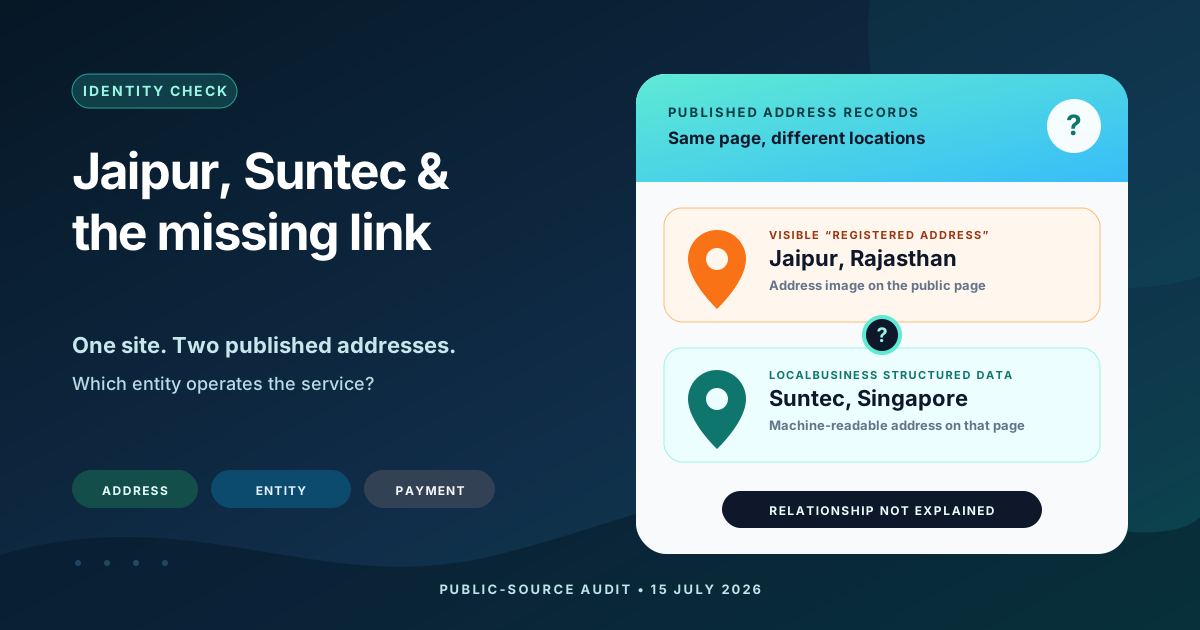
SingaporeAssignmentHelp Address: Jaipur vs Suntec
Why does SingaporeAssignmentHelp.com publish a Jaipur registered address but Suntec business markup? We trace its public company, payment, domain and identity signals.
12 min read
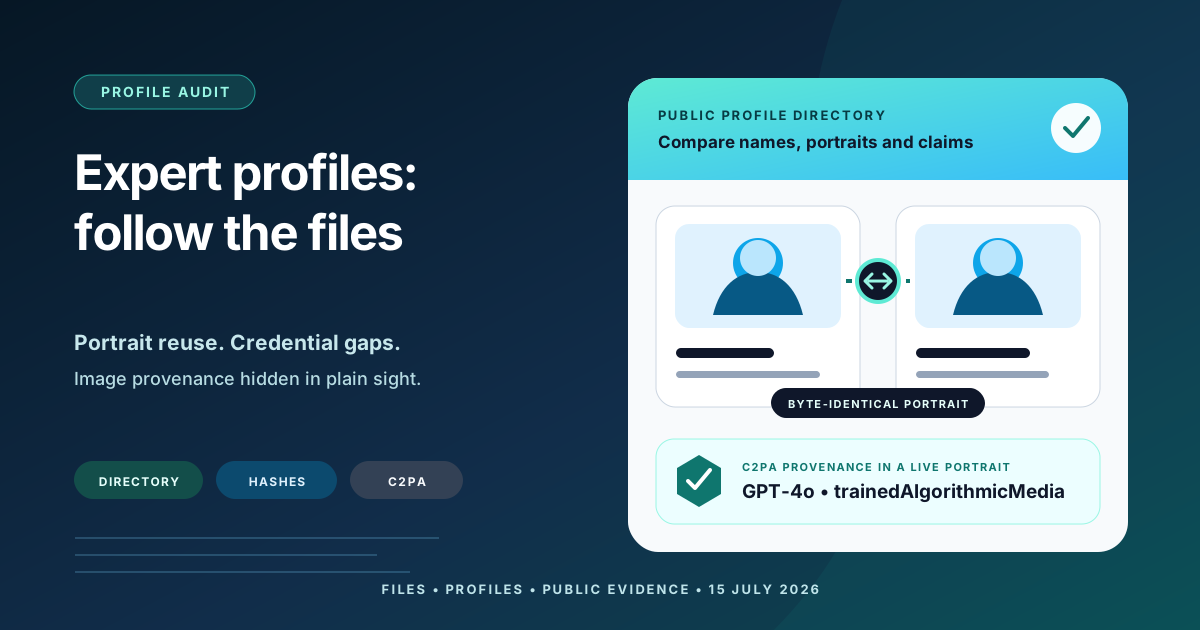
SingaporeAssignmentHelp Expert Profiles: AI Audit
A reproducible audit of 77 public expert profiles, reused portraits, GPT-4o Content Credentials, repeated testimonials and credential-verification gaps.
14 min read
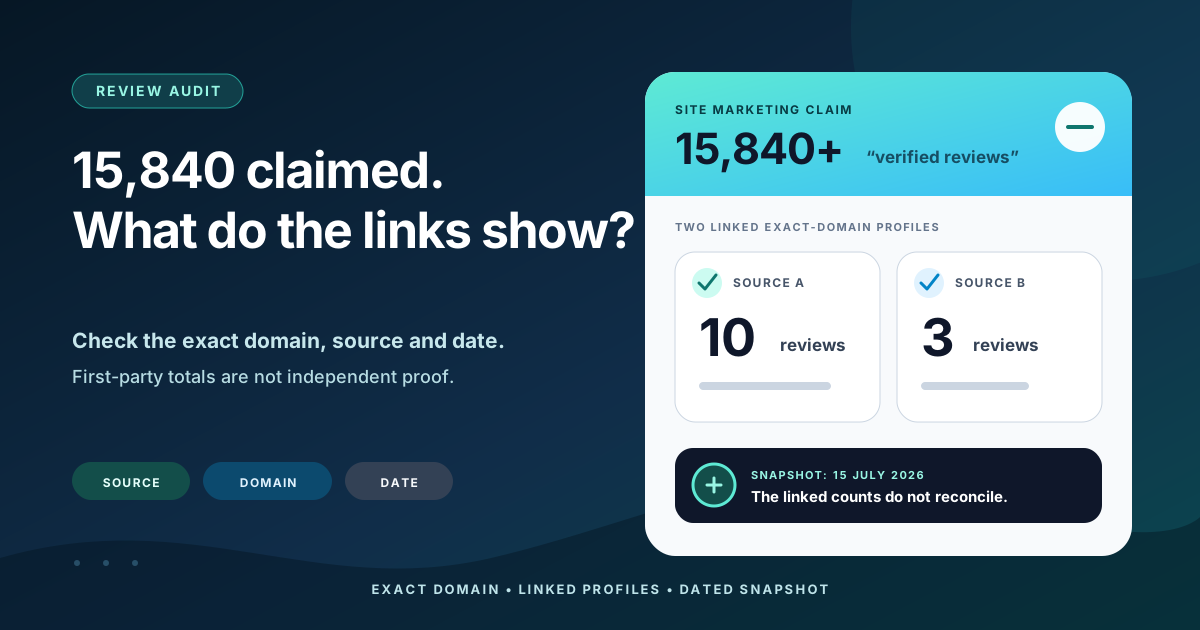
SingaporeAssignmentHelp Reviews: 15,840 Claim Checked
The site advertises 15,840+ verified reviews, but its linked exact-domain profiles showed 10 on Trustpilot and 3 after a Sitejabber redirect on the date checked.
11 min read
Need support you can understand and defend?
Start with the assessment rules. We can scope tutoring, feedback, debugging, editing, source review, or guided drafting while keeping you in control of the final work.